Tribe Gate
Also called Oval Reef, Tribal Gate
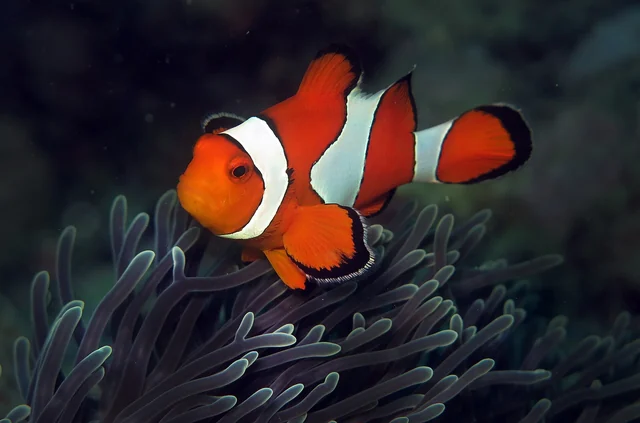
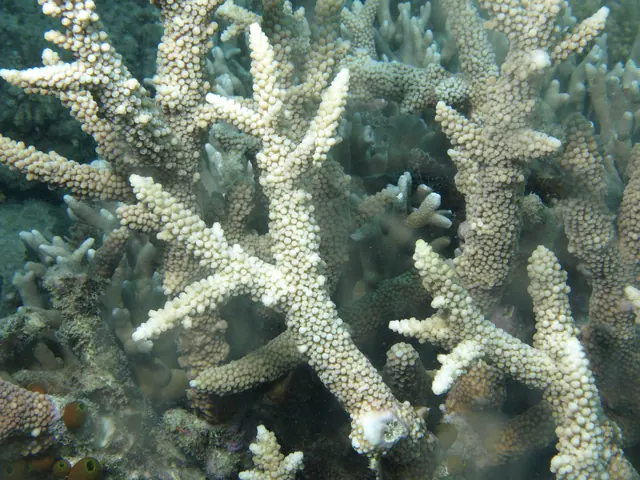
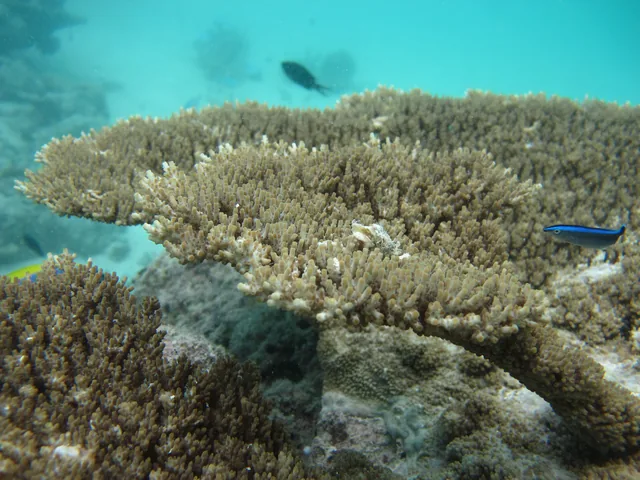
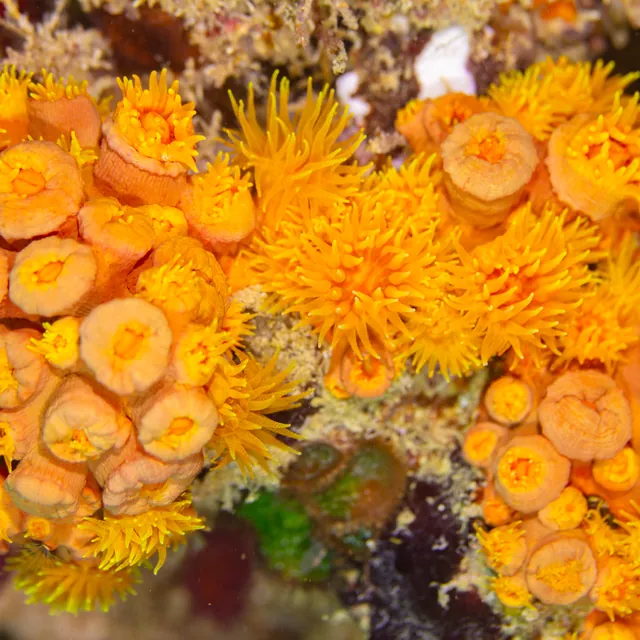
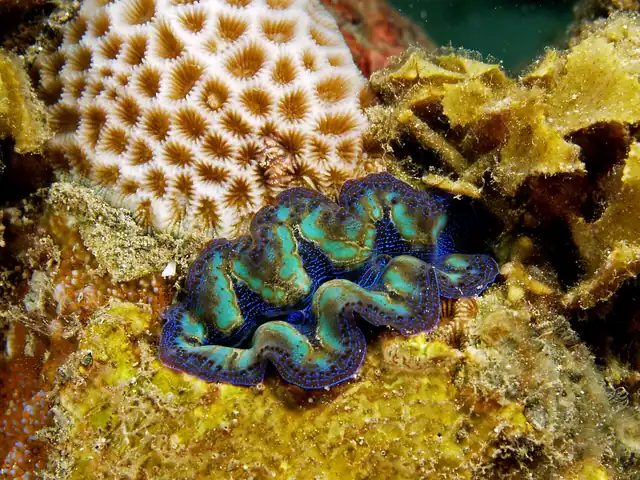
Tribe Gate, also called Oval Reef, is a small underwater hill in the channel off Govind Nagar. Coral shelves step down from 3 to 15 m. Giant clams and clownfish anemones are spread across the reef. In one part the coral died in 2010, and small animals now live in the skeletons.
- Depth
- 3 to 15 m
- Try dive depth
- Up to 12 m
- Who can dive
- Anyone 10 and over, no licence
- Visibility
- 15 to 20 m, often more from Dec to May
- Current
- Low to mild, sometimes moderate; fixed mooring line down and up
- Best months
- Nov to May
- Where
- Channel between Havelock and John Lawrence Island, about 3 km off Beach No. 3
The dive
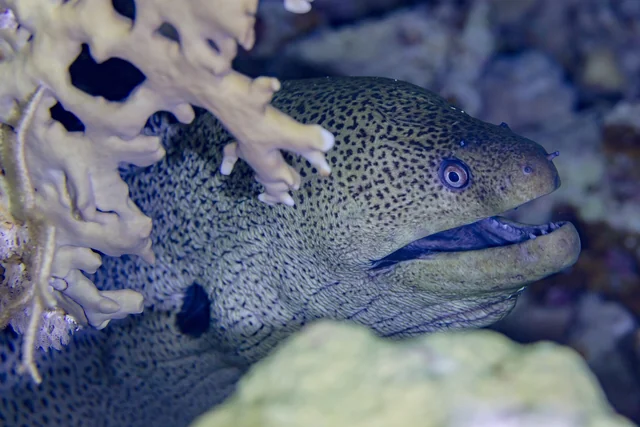
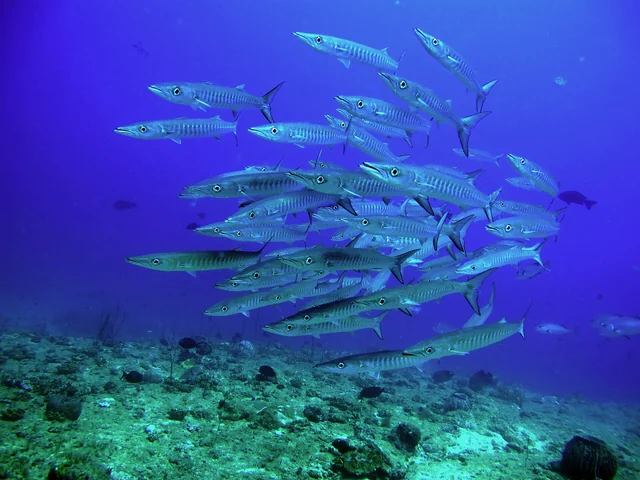
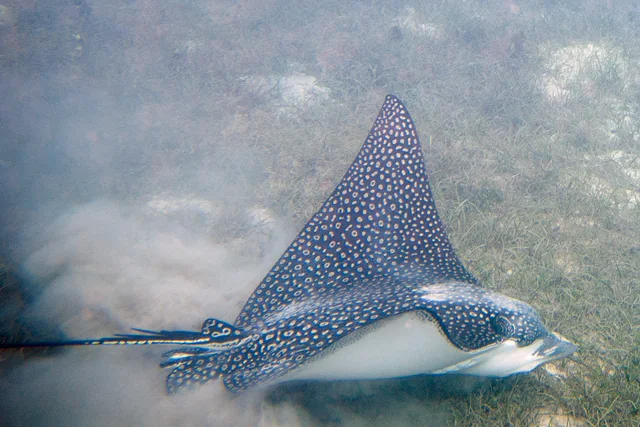
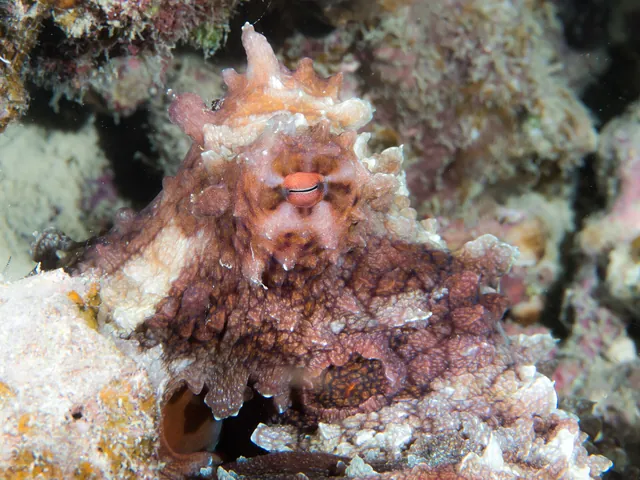
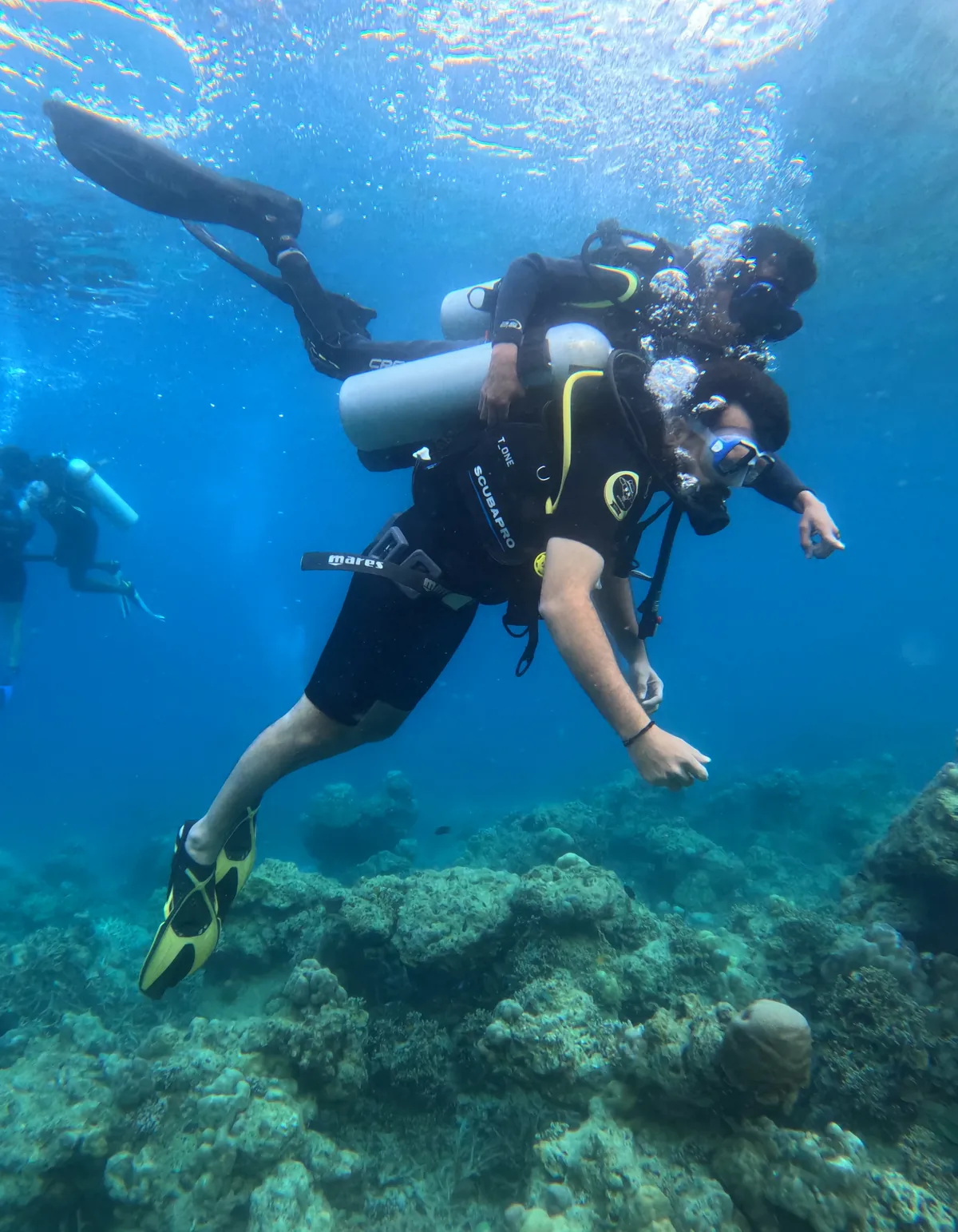
About five minutes after you leave, the boat ties up to a fixed mooring buoy, so no anchor touches the reef. You go down the mooring line with your instructor holding on to you. At 3 to 4 m the reef top has anemones with clownfish, and young barracuda. Then your instructor leads you along the oval, over shelves of coral. Watch the giant clams: they snap shut as your shadow falls on them. Deeper, at 8 to 12 m, are the coral skeletons left by the 2010 bleaching. Morays, nudibranchs and octopus live in the gaps, and two-spot snappers hang above. You come back up the same mooring line. The standard dive is 30 minutes underwater. The Pro upgrade (+Rs 1,000) gives you 45 minutes, enough to go all the way round the oval and spend longer at the coral skeletons.
Look out for
- Five minutes by boat, fixed mooring line, no anchor on the reef
- Many giant clams that close when your shadow passes
- Several clownfish species in the anemone beds
- Coral skeletons from 2010, now home to morays and nudibranchs
- Usually diveable through the monsoon
Stay still over a giant clam and watch it close as your shadow reaches it, but never touch it.
What lives here
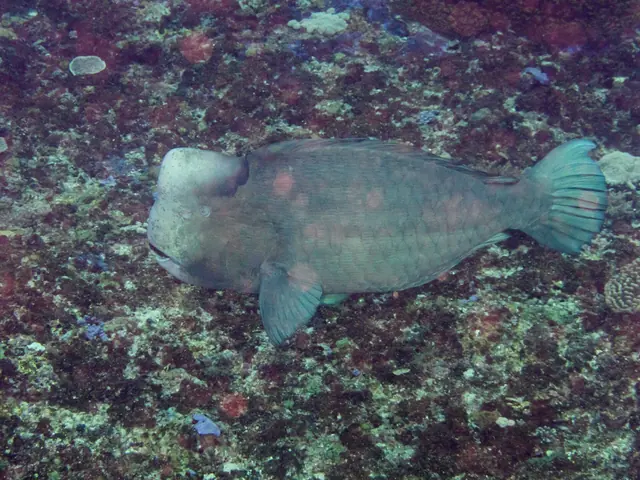
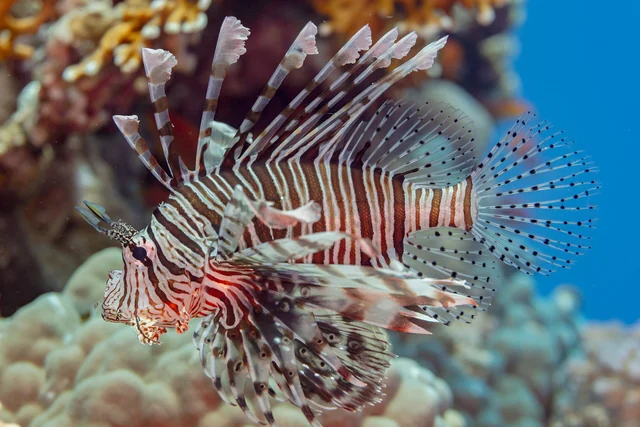
Tap a name to open it in our fish and coral guides. Wild animals come and go, so nothing is promised.
Who it suits
First-time divers and non-swimmers who are fine with a short boat ride. Certified divers and photographers who like small creatures also enjoy the clams and the coral ruins.